Top 10 Underrated Film Soundtracks
Some of the best music you have never heard is hiding in plain sight inside the films you already know. This list is not a ranking of the usual suspects. No Star Wars, no Inception. Instead, these are 10 records that film score enthusiasts obsess over but mainstream audiences rarely encounter. Each one carries a production story, a composer background, or a technical breakthrough that makes it worth seeking out and listening to on its own terms.
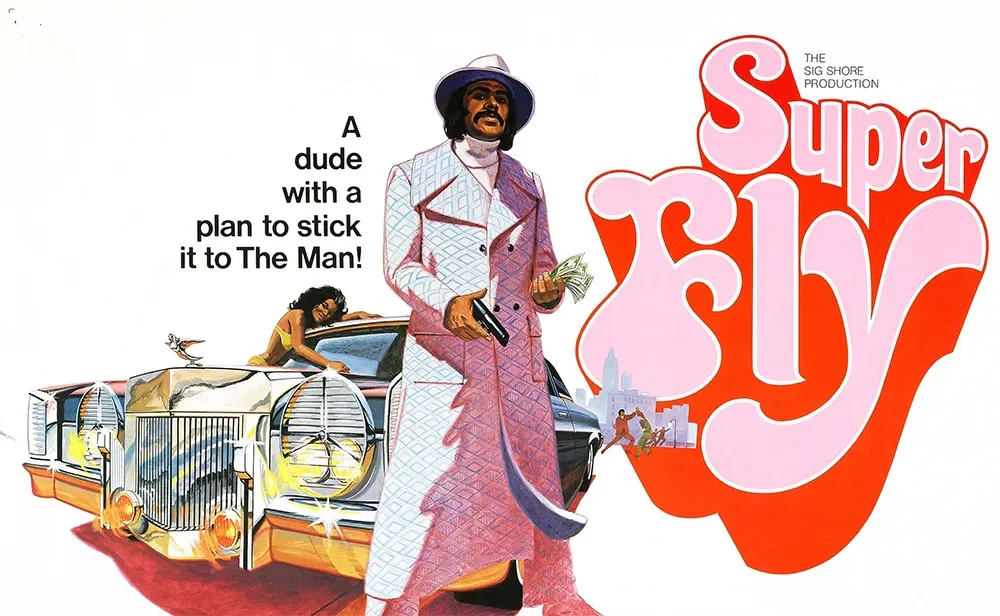
Superfly by Curtis Mayfield; 1972.
Curtis Mayfield paved the way for hip-hop with Super Fly (1972)
Curtis Mayfield's Super Fly soundtrack did more than score a blaxploitation film. It built the blueprint for an entire genre. According to Rolling Stone, Mayfield's "unflinching lyrics about ghetto life" were "a direct inspiration to early rappers," and the album paved the way for hip-hop as both a sonic and lyrical template.
Best moment:Freddie's Dead turns social commentary into dance-floor propulsion without sanding off the despair.
The ripple effect nobody talks about
Super Fly inspired a wave of imitations: Bobby Womack's Across 110th Street, James Brown's Black Caesar, and Willie Hutch's The Mack. This ecosystem of blaxploitation soundtracks became foundational source material for hip-hop producers across generations, well documented by sampling enthusiasts. Womack's Across 110th Street alone gained a second life 25 years later when Tarantino featured it in Jackie Brown (1997). That same decade saw another genre-defining soundtrack emerge from a very different corner of cinema.
Vangelis rewired electronic music with Blade Runner (1982)
The Blade Runner soundtrack is not just a film score: it is an origin point for electronic production as mood, architecture, and narrative. According to Lunacy Audio's technical analysis, the record "altered our relationship with synths" and became "an eternal touchstone for the development and existence of electronic music."
Recommended If You Like: Daft Punk, Tron, ambient noir, worldbuilding scores.
A verified influence chain
Those same analyses trace specific artist-to-artist connections: Cliff Martinez's work (from Solaris to Drive) is frequently cited as soaked in Blade Runner influence, and Disasterpeace's It Follows score is often discussed as a direct transport back to the early-1980s synth landscape. That is a verifiable chain running from Vangelis through Martinez to contemporary synthwave. If you love those records, this is where they started. Vangelis was not the only artist using non-traditional instrumentation to redefine a genre.
Goblin turned horror scoring into art rock with Suspiria (1977)
Goblin's Suspiria score broke from orchestral horror tradition and replaced it with progressive rock intensity. The Italian band's approach was so distinctive that it influenced artists working in entirely different genres decades later.
Best moment: the main theme's whispered menace, where rhythm becomes a trap door.
According to Stereogum's horror soundtrack feature, artists like Broadcast cited "Italian horror scores like Suspiria" as foundational, with the publication noting this "was already music that was foundational to Broadcast's entire discography." Genre prejudice against horror scores kept this record out of mainstream music conversations, but it quietly shaped indie electronic music from the inside. Goblin's unconventional path into film scoring was not unique — some of the best scores come from composers who had no business writing them.
Carter Burwell learned orchestration in three months for Miller's Crossing (1990)
Carter Burwell made his leap into orchestral writing on a deadline: the Coen Brothers gave him three months to learn how to write for an orchestra. That extraordinary directorial trust enabled Burwell to create his first orchestral score for Miller's Crossing (1990), a film that, despite its merits, was a box office disappointment on its first run.
RIYL: lyrical noir, tragic romanticism, and chamber-like orchestral writing that still cuts.
According to Burwell's official website, "As my first orchestral score, Miller's Crossing required learning many new skills. One, of course, was how to write orchestral music." Academic analysis on JSTOR notes the film's "first run was a box office" disappointment, which buried the score's reputation alongside the film's commercial performance. The music deserved far more attention than the film's commercial performance allowed. Another score from the same decade suffered the same fate for an entirely different reason.
Michael Kamen wrote one of the most underrated scores of the 1990s with The Iron Giant (1999)
Michael Kamen's score for The Iron Giant is one of the finest animated scores ever composed, yet animation bias keeps it perpetually overlooked. Den of Geek's analysis calls it "not only one of his finest works but also one of the finest animated scores ever, an emotionally mature and engrossing work composed of resonant ideas that beautifully bolsters the narrative."
Best moment: the music's ability to pivot from wide-eyed wonder to genuine dread without breaking the spell.
The invisible ceiling for animation scores
Film score criticism consistently undervalues animation, horror, and science fiction. These genres produce some of the most compositionally sophisticated work, but the cultural assumption that "animated" means "for children" prevents scores like The Iron Giant from entering greatest-of-all-time conversations. Kamen's music here is complex, deeply felt, and rewarding for any listener who gives it a chance. Where Kamen was overlooked because of his genre, the next composer on this list was overlooked because Hollywood simply did not know his name yet.
Jóhann Jóhannsson built an "evil orchestral bass" for Prisoners (2013)
Jóhann Jóhannsson created one of the most unsettling sounds in modern film scoring for Denis Villeneuve's psychological thriller: a low-end presence that feels less like an instrument and more like an ominous presence. In an interview with Red Bull Music Academy, Jóhannsson described the technique: "It's basically eight, I think it's eight contrabasses playing in unison, but this is also layered several times and processed through various means and distorted and put through side channel distortion and various nefarious means of creating this deeply evil orchestral bass sound."
Best moment: the sub-bass growl that seems to swallow the room, turning silence into pressure.
An outsider's advantage
Villeneuve specifically sought a composer unexposed to Hollywood conventions. According to Little White Lies, regarding Prisoners: "He was obviously making his first foray into Hollywood filmmaking with Prisoners, and maybe he wanted someone who had not been exposed to that" traditional approach. Jóhannsson, who started in shoegaze-influenced indie before blending minimalist classical with film scoring according to the BFI's analysis, died tragically in 2018 before achieving the mainstream recognition his work warranted. His outsider status mirrors the challenge facing another composer whose orchestral brilliance was dismissed not for being too experimental, but for scoring an animated film.
John Powell made How to Train Your Dragon (2010) soar without getting credit
John Powell's How to Train Your Dragon score delivers blockbuster-level emotional engineering, but it rarely gets discussed in the same breath as the biggest canonized names. Many enthusiasts consider it home to some of the greatest individual soundtrack moments of the 2010s, yet it seldom enters the same conversation as work by John Williams or Hans Zimmer.
Best moment:Test Drive is the obvious peak, with Romantic Flight and Forbidden Friendship close behind for pure lift.
Movies with Mitchell argues it doesn't get "the same hype as scores from John Williams or Hans Zimmer," noting "'Test Drive' is one of the greatest soundtrack moments in movie history, 'Romantic Flight' is gorgeous and 'Forbidden Friendship' has an unbelievable feel-good quality." Animation bias strikes again. This is orchestral writing at its most thrilling and its most tender, and it works brilliantly as a standalone listen. If Powell represents the overlooked end of lush orchestration, the next entry represents its polar opposite: the deliberate destruction of beautiful sounds.
Mica Levi defined a new scoring language with Under the Skin (2013)
Mica Levi's score for Under the Skin turns strings into a nervous system: dissonant textures and electronic sound design that make the air feel unfamiliar. It has become a foundational example of the experimental scoring movement and a key influence on how composers approach avant-garde film music.
RIYL: musique concrète touches, modern classical dread, and club-adjacent minimalism.
The University of Surrey identifies Levi's work on Jackie as demonstrating "Filminimalist techniques," a methodology merging minimalist repetition with experimental music applied to narrative film. The BFI's analysis identifies this score as foundational to the experimental scoring movement. Levi remains underrated in broader film music discussions despite being one of the most innovative composers working today, according to Classic FM's composer profile. Levi's experimental approach opened the door for a wave of indie musicians who would bring their own unconventional methods into film.
Son Lux made Everything Everywhere All at Once (2022) inseparable from its score
Son Lux made a score that feels built into the movie's DNA, because it was: the music was part of the film from the moment the script was written. Year-end score roundups singled it out as a near-ideal example of music that can highlight monotony one moment and multiversal chaos the next.
Best moment: the quick-change emotional whiplash, where a tender motif gets yanked into a percussive panic spiral.
The indie-to-film pipeline
This entry also captures a broader trend: indie and alternative musicians crossing into film scoring and bringing their own studio instincts with them.
Christopher Bear and Daniel Rossen (Grizzly Bear) scored Past Lives (2023).
Alex G scored A24's I Saw the TV Glow (2024).
The Octopus Project scored Sasquatch Sunset (2024), drawing attention from IndieWire for delicate guitars and electronic melodies that ripple outward like wind through tree branches.
These composers approach film as an extension of their experimental work rather than applying Hollywood formulas, and the results are some of the freshest sounds in cinema. Not every overlooked score comes from an outsider, though; sometimes a composer's own success buries his best work.
Daniel Pemberton got overshadowed by his own work on Steve Jobs with The Man from U.N.C.L.E. (2015)
Daniel Pemberton's The Man from U.N.C.L.E. score is one of the most stylish and inventive genre scores of the 2010s, yet it barely registered. At the time, critic Den of Geek noted that Guy Ritchie's “sadly undervalued take on the kitsch 1960s spy series boasted one of the year's greatest scores”, but it was “overshadowed by Pemberton's headline-grabbing work on Steve Jobs”.
RIYL: spy-jazz pastiche, harpsichord flexes, and groove-first orchestration.
Pemberton has since gone on to score Spider-Man: Across the Spider-Verse (2023), blending orchestral, electronic, hip-hop, and experimental elements across animated dimensions. But The Man from U.N.C.L.E. remains the hidden gem in his catalog, a sleek, retro-futuristic listen that rewards repeat plays.
These scores are waiting for you
The throughline connecting all 10 of these records is the same: exceptional music overshadowed by circumstances that had nothing to do with quality. Start with the one that matches your taste. If you love electronic production, go to Blade Runner. If you want something you have genuinely never heard before, try Jóhannsson's Prisoners or Mica Levi's Under the Skin. If orchestral grandeur is your thing, How to Train Your Dragon and The Iron Giant will not let you down.
Follow Underrated Songs on TikTok and Instagram to discovery your new favorite songs that streaming algorithms will never surface on their own.
